
Dental Bridges: Replace Missing Teeth Without Implants
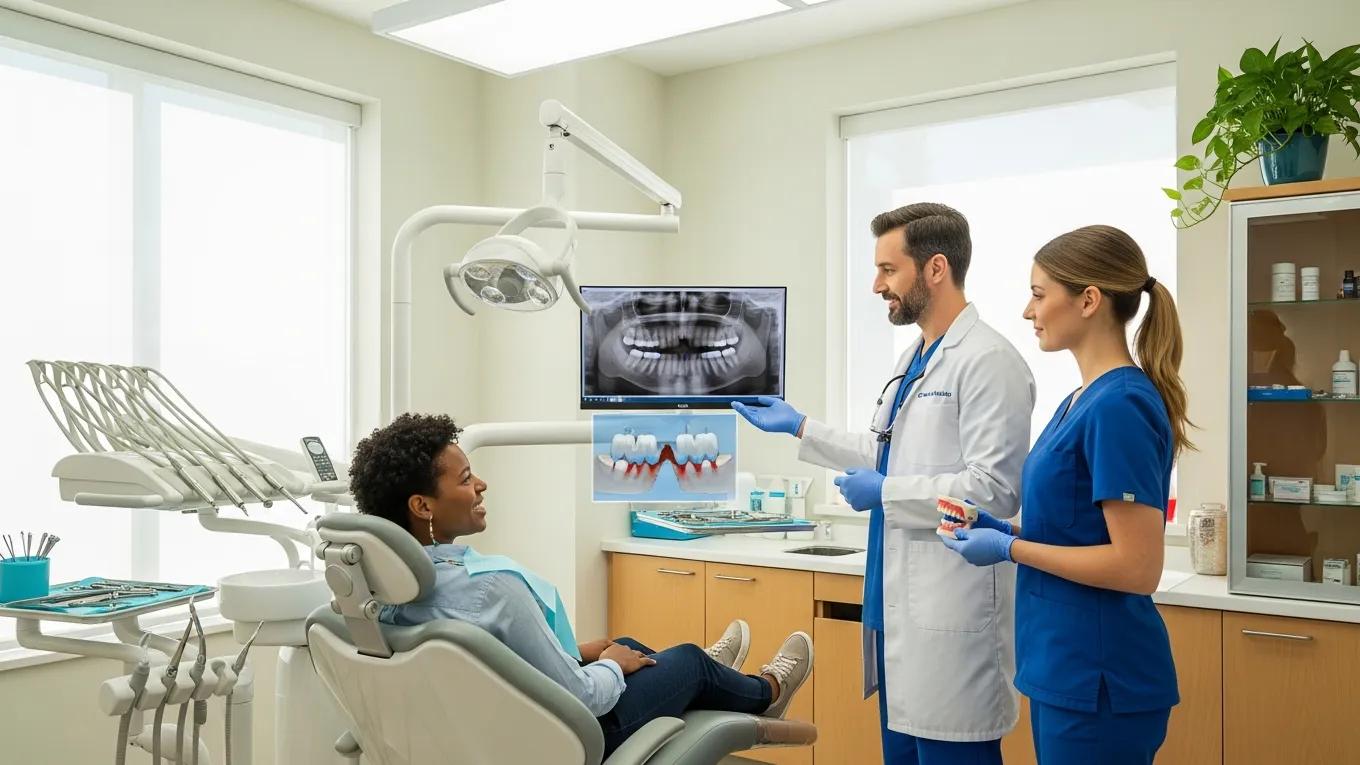
Dental Bridges: Your Trusted Solution to Replace Missing Teeth Without Implants
Dental bridges are a dependable way to replace missing teeth without surgical implants. These fixed restorations restore chewing and speech, improve smile appearance, and help prevent neighboring teeth from shifting. This article summarizes bridge types, benefits, the typical process, patient considerations, comparisons with implants, and cost/insurance basics.
Key Takeaways
- Dental bridges replace missing teeth to restore function and aesthetics without implants.
- Four main bridge types: traditional, cantilever, Maryland, and implant-supported.
- Bridges help prevent adjacent teeth from shifting and maintain dental alignment.
- Typical steps: consultation, tooth prep, impressions, and final fitting.
- Good oral hygiene and regular check-ups support bridge longevity.
- Bridges usually require less recovery time than implants and are less invasive.
- Costs vary by type and material; many plans offer partial coverage.
- Consult your dental provider to choose the best bridge type for you.
Types of Dental Bridges
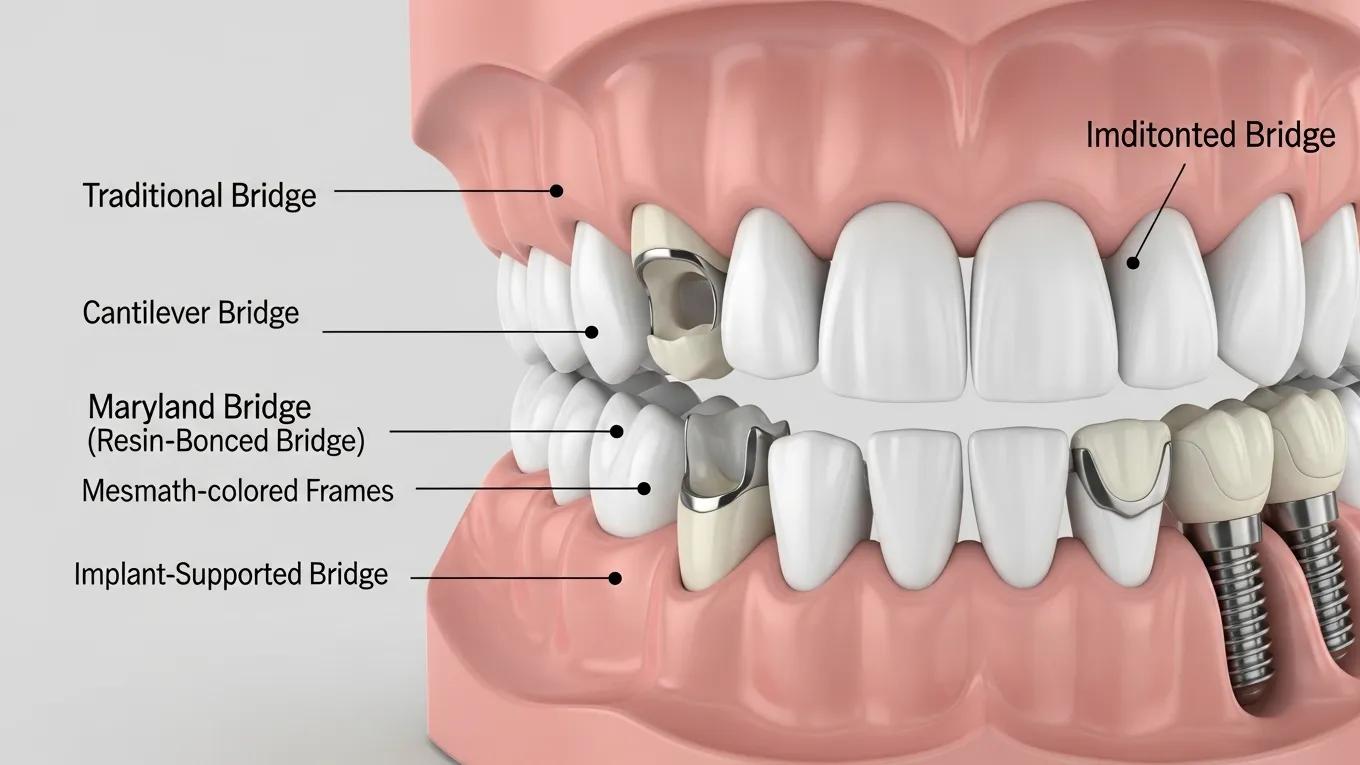
Bridges come in several designs to suit different clinical needs. Discuss options with your clinician to determine which fits your oral health and goals.
- Traditional Bridges: Pontics (false teeth) held by crowns on adjacent teeth, commonly used when those teeth are healthy enough for crowns.
- Cantilever Bridges: Anchored on one side only, used when support exists on a single adjacent tooth.
- Maryland Bridges: A bonded metal or porcelain framework attaches to the backs of adjacent teeth for a more conservative option.
- Implant-Supported Bridges: Anchored to implants rather than crowns, offering enhanced stability and durability when implants are suitable.
Each type has benefits and trade-offs; your provider will evaluate tooth health, bite, and esthetic needs to recommend the right solution.
Advantages of Dental Bridges

Bridges offer practical and esthetic advantages that make them a widely used tooth-replacement option.
- Restores Function: Reestablishes chewing and speech affected by missing teeth.
- Prevents Shifting: Fills the gap to help maintain alignment of surrounding teeth.
- Improves Aesthetics: Replaces visible gaps to enhance smile appearance and confidence.
- Durability: With proper care, bridges can last many years, making them a long-term option.
Midwest Family Dental Care emphasizes selecting the appropriate bridge for each patient and can guide you through options and scheduling a consultation.
Step-by-Step Procedure
The process is straightforward and typically completed over a few visits.
- Initial Consultation: Oral exam and discussion of the best bridge type for your needs.
- Preparation: Adjacent teeth are reshaped as needed to receive crowns or bonding.
- Impressions: Accurate impressions or digital scans create a custom bridge.
- Fitting & Cementation: The bridge is fitted, adjusted for comfort and bite, then cemented or secured.
At Midwest Family Dental Care, clinicians explain each step and address comfort and outcome expectations during your visits.
Important Considerations for Patients
Keep these points in mind when considering a bridge:
- Oral Hygiene: Brushing, flossing (with threaders), and professional cleanings protect the bridge and supporting teeth.
- Regular Check-Ups: Routine exams ensure fit and detect early issues.
- Material Options: Porcelain, metal, or combos affect appearance, strength, and cost.
- Cost & Insurance: Discuss pricing and coverage with your provider to plan for out-of-pocket expenses.
What Are Dental Bridges and How Do They Restore Your Smile?
Dental bridges are prosthetic appliances using pontics anchored to adjacent teeth or implants. They restore chewing and speech, improve smile aesthetics, and reduce the risk of neighboring teeth shifting into the empty space.
How Dental Bridges Replace Missing Teeth Without Surgery
Unlike implants, most bridges do not require surgery. Bridges can often be completed in fewer appointments and with less recovery time, making them a good option for patients who prefer to avoid surgical procedures.
What Are the Step-by-Step Procedures for Getting a Fixed Dental Bridge?
In short: consultation, preparation of supporting teeth, accurate impressions or scans, and final fitting and cementation. Your dentist will review aftercare and follow-up appointments to confirm success.
How Do Dental Bridges Compare to Implants in Recovery and Care?
Key differences to consider:
- Recovery Time: Bridges generally need less recovery than surgically placed implants.
- Care: Both require good hygiene; bridges may need occasional adjustments over time.
- Eligibility: Not everyone is a candidate for implants; bridges can be an effective alternative when implants are unsuitable.
Discuss your medical history, bone health, and preferences with your dentist to determine the best long-term option.
What Are the Costs and Insurance Options for Fixed Dental Bridges?
Bridge costs vary by type and material. Many insurance plans offer partial coverage. Midwest Family Dental Care can help review benefits, provide cost estimates, and outline payment options to make treatment accessible.
Frequently Asked Questions
1. How long do dental bridges typically last?
Bridges commonly last about five to 15 years depending on type, materials, and oral care. Good hygiene and regular dental visits can extend their lifespan.
2. Are there any dietary restrictions after getting a dental bridge?
Avoid hard, sticky, or very chewy foods for a short period after placement. Once healed, most patients return to a normal diet while avoiding habits that stress the bridge.
3. Can dental bridges be repaired if damaged?
Minor damage is often repairable—re-cementing or replacing a pontic is possible. Severe damage may require fabricating a new bridge.
4. How do I care for my dental bridge?
Brush twice daily, floss (use a threader or interdental brush under the bridge), and follow recommended dental visits. An antibacterial mouthwash may be advised.
5. What should I expect during the recovery period after getting a dental bridge?
Expect mild sensitivity or discomfort for a few days. Over-the-counter pain relief typically manages symptoms. Attend follow-ups to confirm fit and comfort.
6. Are dental bridges suitable for everyone?
Bridges suit many but not all patients; factors include the health of adjacent teeth, gum condition, and overall oral health. A professional evaluation will determine suitability.
7. How do I choose the right type of dental bridge?
Your dentist will consider gap location, condition of neighboring teeth, esthetic needs, and budget to recommend the most appropriate bridge type.
Conclusion
Dental bridges are a reliable, less-invasive option to replace missing teeth, restoring function and smile appearance while preventing neighboring teeth from shifting. For personalized advice on the best bridge for you, schedule a consultation with your dental provider to review options and next steps.